
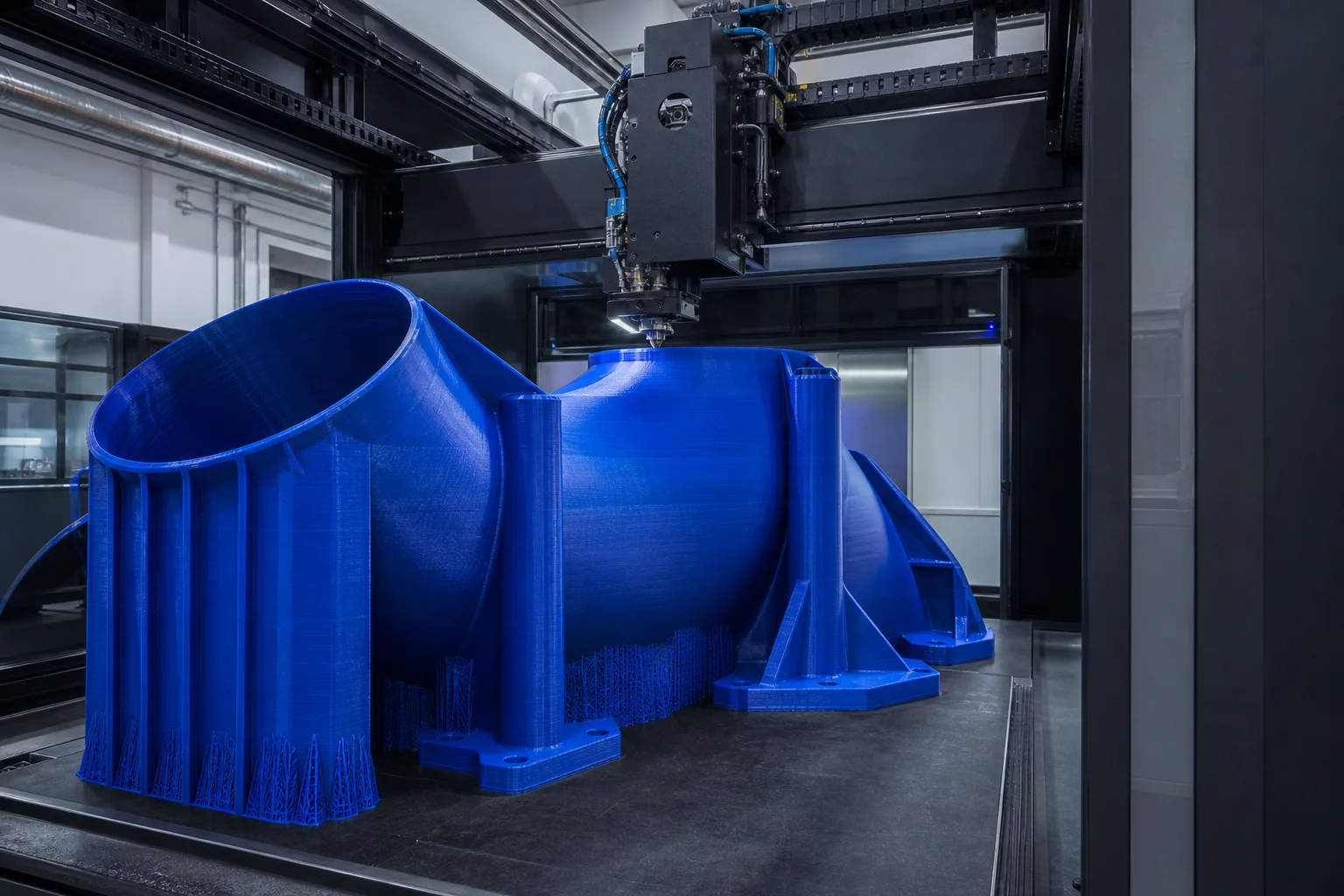
SLA and FDM can both produce excellent engineering parts, but they solve different problems. Process selection should begin with part size, feature detail, material behavior, environment, and what the build must prove.
Where FDM earns its place
FDM is often the practical choice for larger geometry, robust fixtures, assembly aids, functional prototypes, and parts where engineering thermoplastics provide the needed behavior.
- Large build envelopes
- Useful engineering thermoplastics
- Durable fixtures and tooling
- Efficient iteration on substantial parts
Where SLA is the stronger tool
SLA is valuable when fine features, smooth surfaces, sealing geometry, visual fidelity, or smaller dimensional details are central to the test.
- Fine detail and complex small features
- Smooth presentation surfaces
- Clear or specialized resin options
- High-fidelity form and fit reviews
Choose around the engineering question
A beautiful prototype is not automatically a useful one. Define the decision the build must support, then select the process, orientation, material, and finishing plan around that requirement.
END / 5 MIN READMore field notes →