
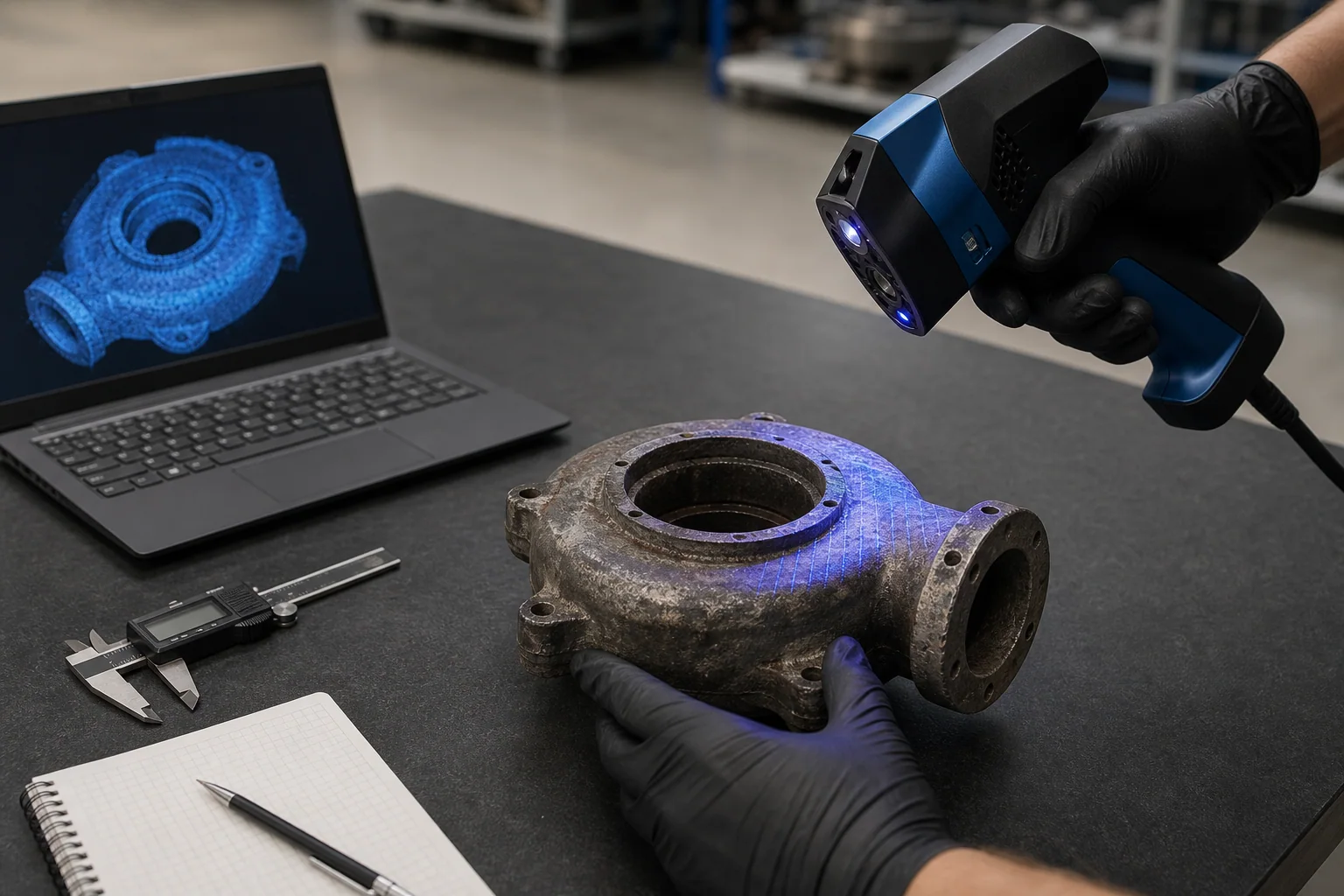
An unavailable component rarely becomes urgent on a convenient schedule. The equipment is still valuable, the original supplier is gone, and the drawings—if they ever existed—cannot be found. A disciplined reverse-engineering process turns that physical artifact into a controlled engineering asset.
Start with function, not geometry
A scan can capture shape, but shape alone does not explain what the part must do. Before modeling begins, document interfaces, loads, wear surfaces, assembly sequence, material clues, environmental exposure, and the failure mode that created the need.
This functional context determines which dimensions are critical and which can be simplified or improved.
Build a trustworthy digital definition
Measurement methods should match the feature and tolerance. Scanning is powerful for freeform surfaces; calipers, micrometers, gauges, and fixtures remain essential for interfaces and controlled geometry.
- Capture the full assembly context
- Reconstruct design intent in parametric CAD
- Document materials, fits, and tolerances
- Identify assumptions that require validation
Validate before committing to production
A prototype or first article should answer specific questions: Does it assemble? Are interfaces correct? Does the material behave appropriately? Can the chosen process hold the required features?
The goal is not merely to copy an old part. It is to create a repeatable, supportable replacement with a clear technical record.